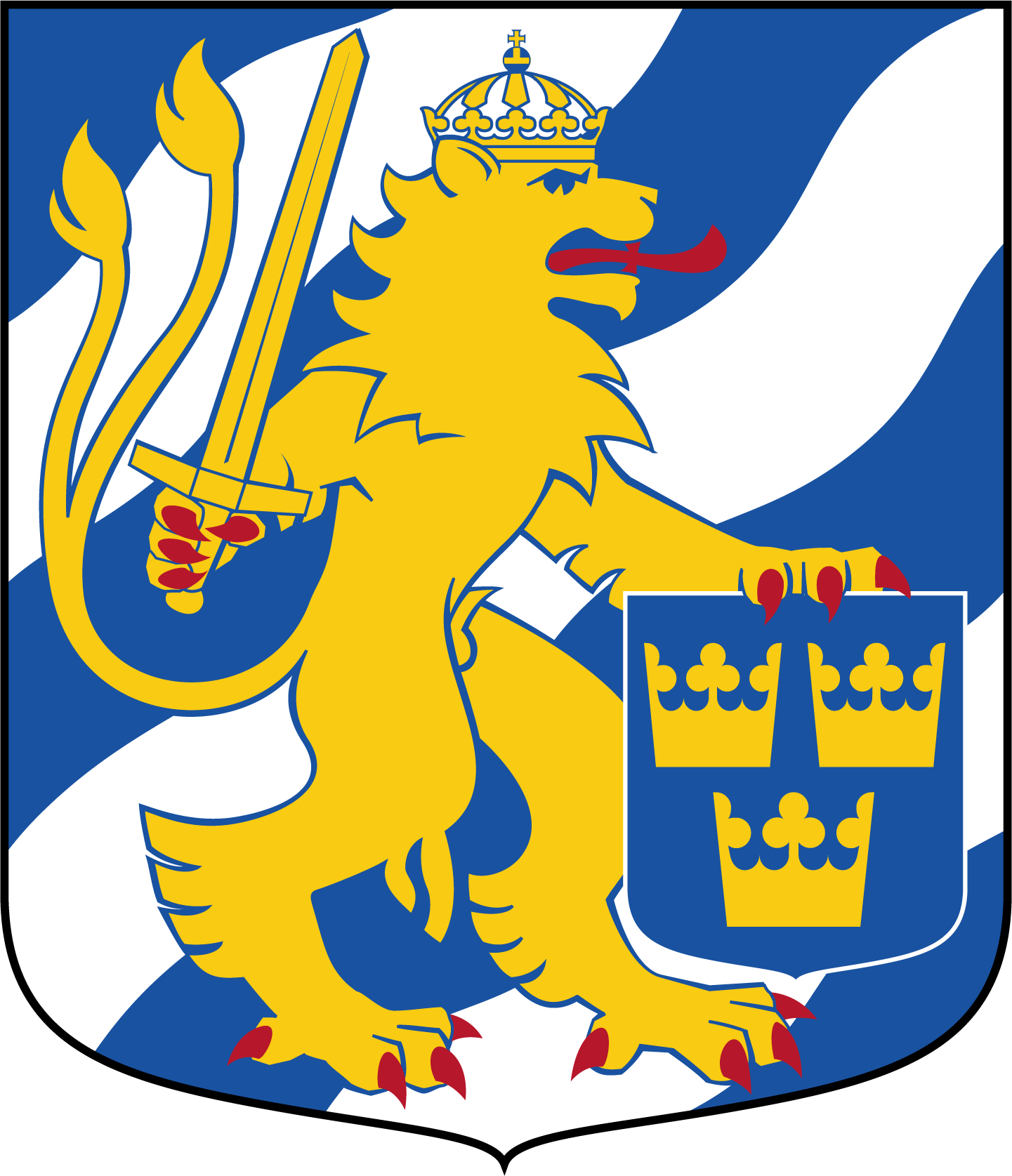

Coat of arms of Gothenburg
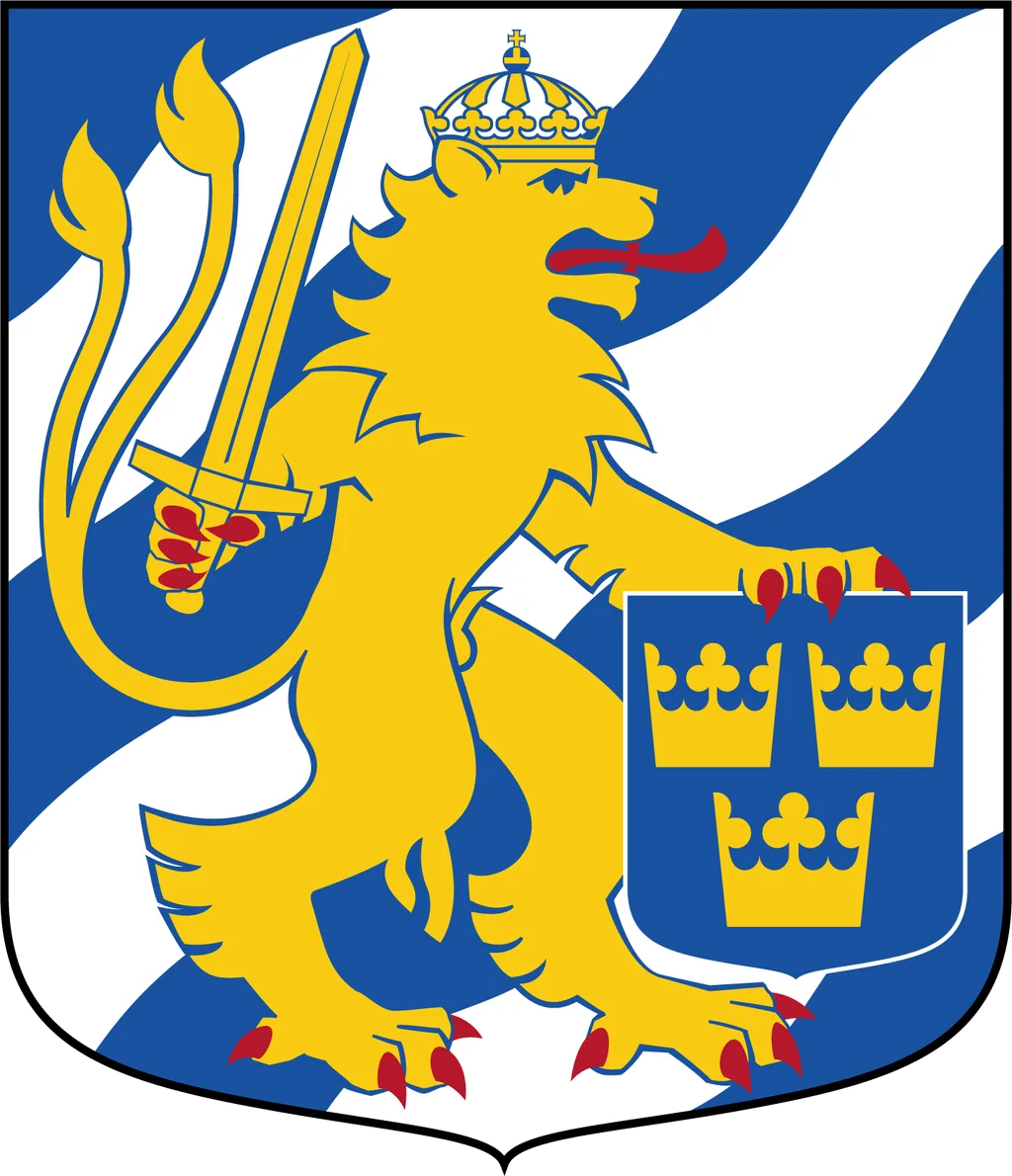
Gothenburg’s arms show a golden lion carrying a sword and a small shield on blue.
Swedish description in the Heraldica record
I blått fält tre genom vågskuror bildade ginbalkar av silver överlagda med ett sinistervänt lejon av guld krönt av guld med dubbelsvans med röd beväring (allusion: Götalands vapen) hållande i dexter hand ett svärd av guld och hållande i sinister hand en miniatyrsköld Lilla riksvapnet [I blått fält tre kronor av guld 2 + 1.].
This is the Swedish description in the Heraldica record. How it was composed and whether it is an official blazon have not been independently verified. The editorial text below is based on the linked source.
Designers
- Vladimir A. Sagerlund
Registration and history
- 1621: In use as of
- 30 June 1952: Royal confirmation on
- 1 October 1973: Registered at the National Board of Patents and Registration
What the arms show
Three wavy silver bars sit beneath a crowned golden lion with a split tail on a blue shield. The lion carries a sword and a small shield bearing Sweden’s lesser national arms.
Source: Heraldica record 3120·Göteborgs Stad: Göteborgs historia och stadsvapen
The city arms and their interpretation
The City of Gothenburg connects the arms with the city’s foundation in the seventeenth century. It explains the sword-bearing lion and national shield as an image of Gothenburg serving as Sweden’s western defence against Denmark. This is the city’s own interpretation of the design’s meaning.
Heraldic elements
The heraldic elements are identified using HERO, a heraldry ontology published through Finland's Finto service. It provides structured terminology for describing coats of arms and their components. The list describes the structure of the arms, not the symbolic meaning of its elements.
- escutcheon
- three bendlets sinister
- field
- Or
- Argent
- Gules
- Azure
- lion
- escutcheon (mobile charge)
- unpartitioned
- sword
Sources and image rights
Heraldica / National Archives of Finland · Wikidata
Image licence: CC BY-SA 3.0
Image source and credit: National Archives of Sweden / Vladimir Sagerlund
Original image. The image has been resized and converted to WebP. The derivative retains the original image’s licence.