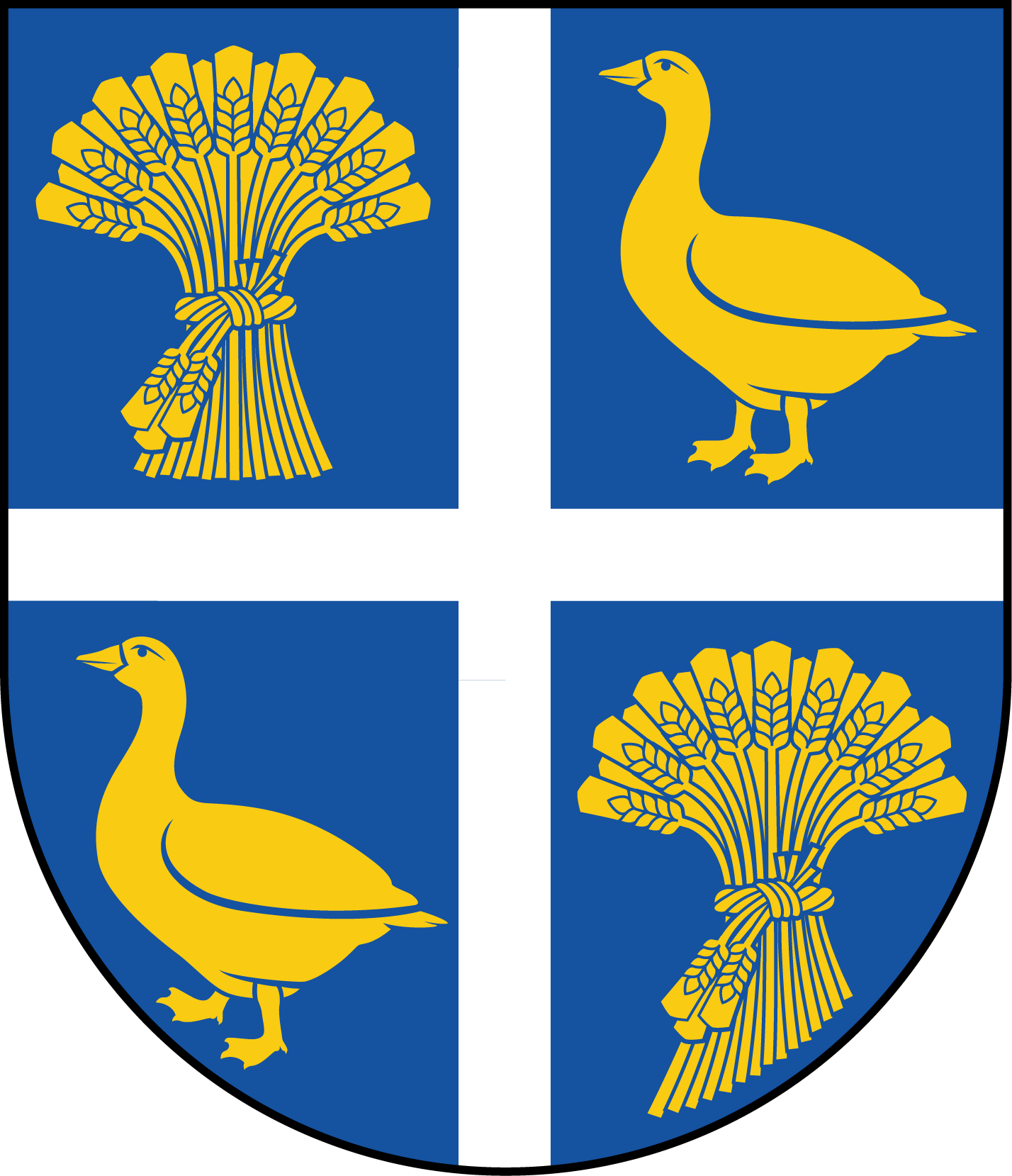

Coat of arms of Herrljunga
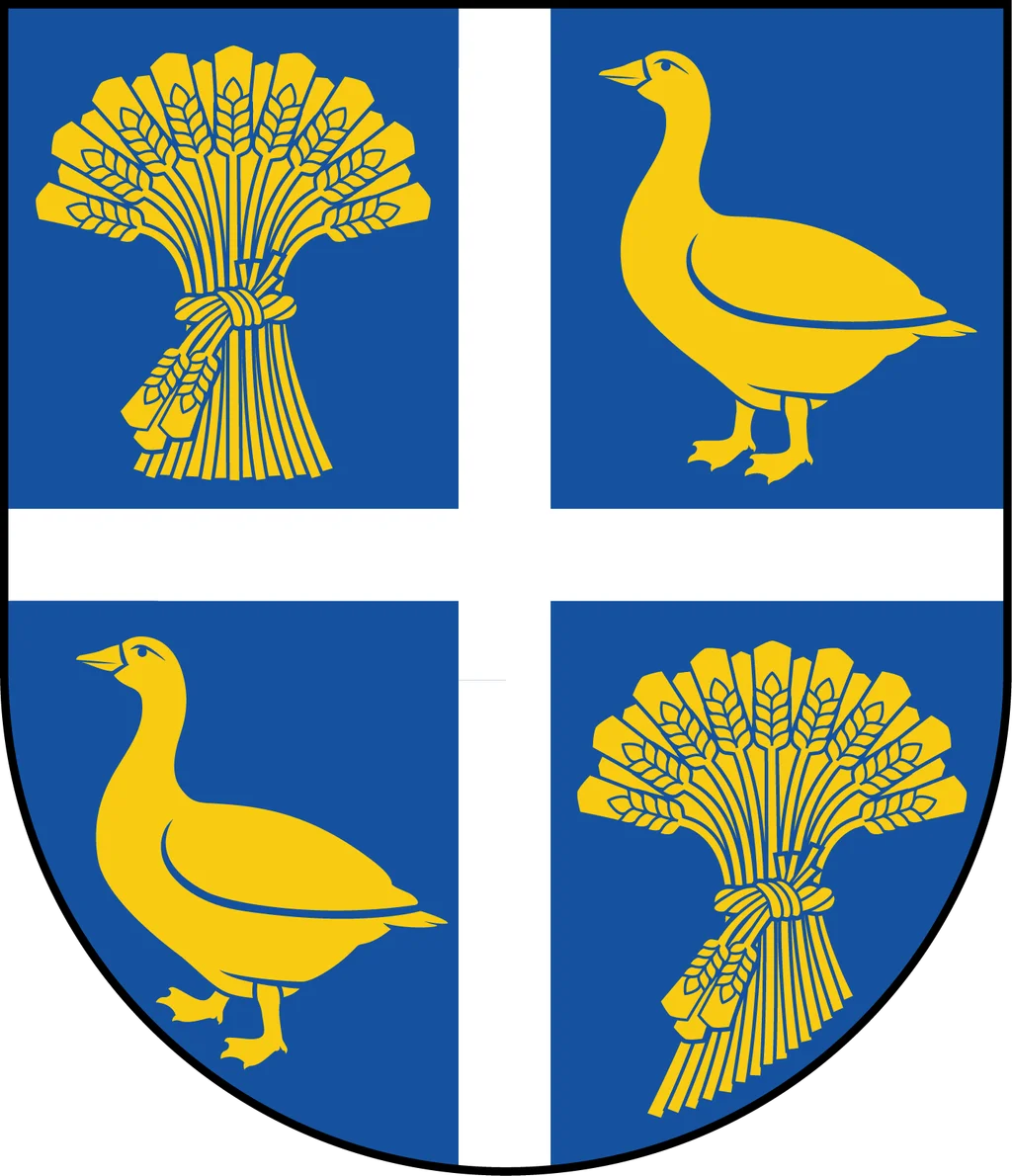
Herrljunga’s arms bring together a silver cross, gold sheaves and geese on a blue shield.
Swedish description in the Heraldica record
I blått fält ett smalt kors av silver åtföljt av två kärvar av guld i första och fjärde fältet och åtföljd av två gäss av guld i andra och tredje fältet.
This is the Swedish description in the Heraldica record. Its status as an official blazon has not been independently verified here. The editorial text distinguishes the registry wording from the municipality’s interpretations.
Designers
- Vladimir A. Sagerlund
Registration and history
- 12 December 1975: Registered at the National Board of Patents and Registration
Motifs and registry wording
The Swedish description in the Heraldica record places a narrow silver cross on a blue field. Gold sheaves occupy the first and fourth quarters, and geese the second and third.
Source: Heraldica record 3114
The municipality’s account
Herrljunga Municipality says the arms were created for Herrljungaköping in 1956. The present municipality was formed in 1974 when Herrljunga and Gäsene merged. The municipality interprets the cross as a reference to the railway junction, the sheaves as a motif taken from the Kullings district seal, and the geese as drawn from the Gäsene district seal; Gäsene’s wetlands were used as pasture for geese.
Heraldic elements
The heraldic elements are identified using HERO, a heraldry ontology published through Finland's Finto service. It provides structured terminology for describing coats of arms and their components. The list describes the structure of the arms, not the symbolic meaning of its elements.
- escutcheon
- field
- Or
- Argent
- Azure
- garb
- goose
- two
- cross
- unpartitioned
Sources and image rights
Heraldica / National Archives of Finland · Wikidata
Image licence: CC BY-SA 3.0
Image source and credit: National Archives of Sweden / Vladimir Sagerlund
Original image. The image has been resized and converted to WebP. The derivative retains the original image’s licence.