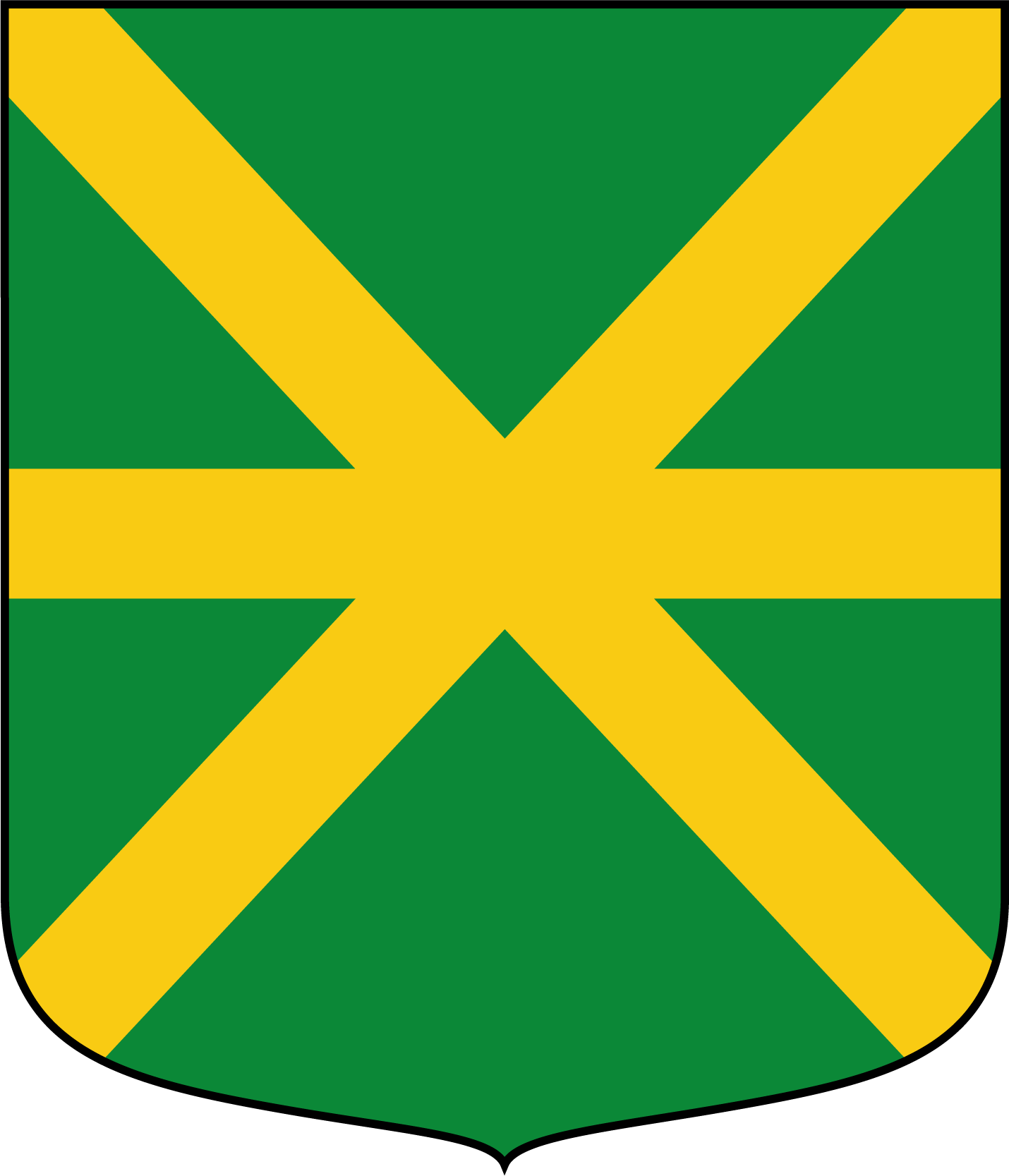

Coat of arms of Kävlinge
Kävlinge’s arms show a six-armed gold cross on a green field.
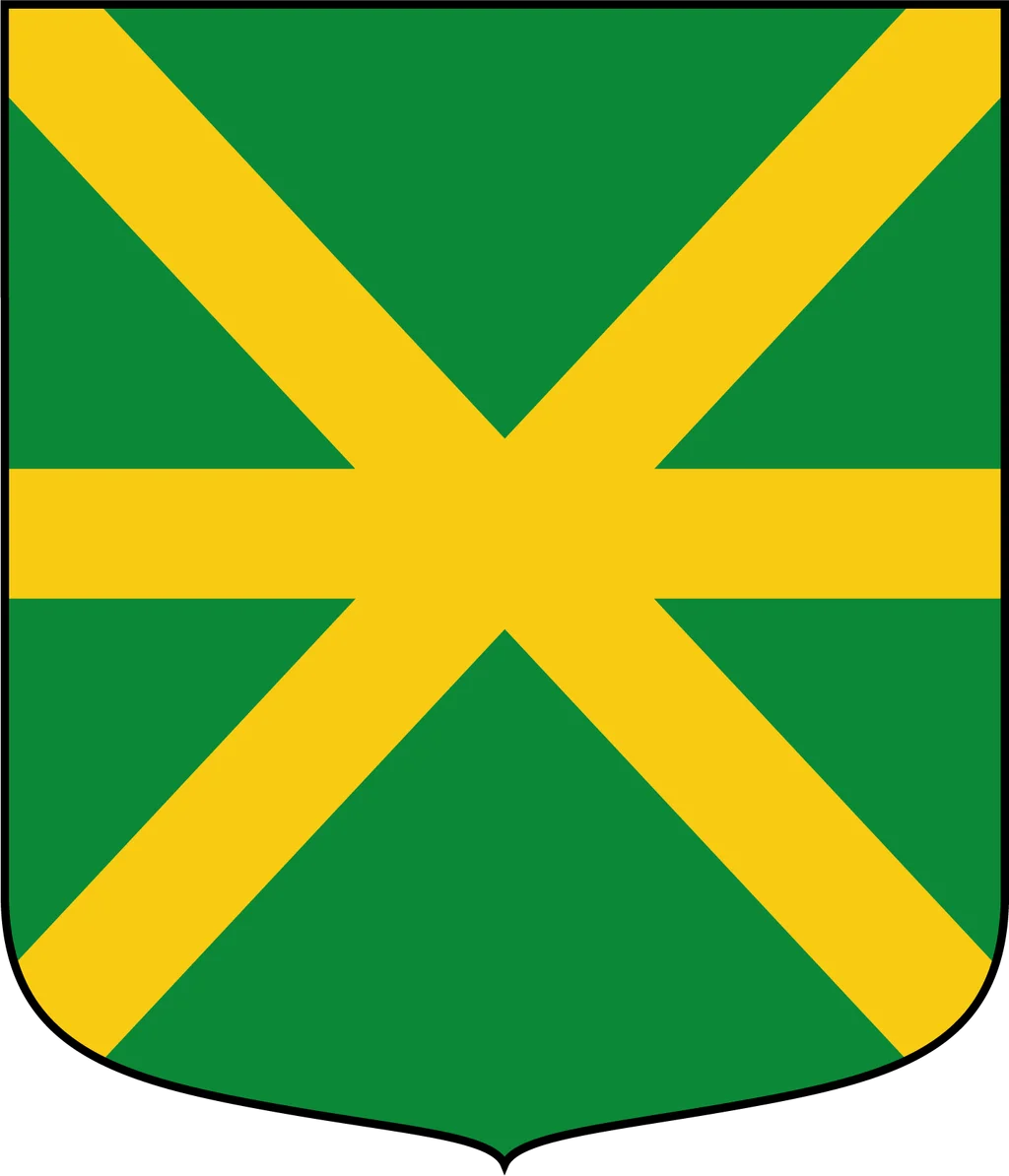
Swedish description in the Heraldica record
I grönt fält en sträng bjälkvis av guld förenad med en sträng av guld förenad med en ginsträng av guld.
The automatically assembled Swedish description in the Heraldica record is defective. The description and explanation below are based on Kävlinge Municipality’s graphic manual.
Designers
- Vladimir A. Sagerlund
Registration and history
- 27 July 1955: Royal confirmation on
- 4 April 1975: Registered at the National Board of Patents and Registration
The municipality’s blazon
Kävlinge Municipality’s graphic manual describes a six-armed gold cross on a green field. Its Swedish blazon says the cross is formed from a narrow fess, a kavle and a ginkavle; the specialist terms are retained in Swedish rather than assigned uncertain English equivalents.
Source: Kävlinge kommun: Grafisk manual
A railway junction
The municipal manual says the arms were designed for Kävlinge market town in 1955 to symbolize its role as a railway junction, where six railway lines met. When Kävlinge Municipality was formed in 1974, it adopted the previous Kävlinge arms because Löddeköpinge Municipality had none of its own.
Source: Kävlinge kommun: Grafisk manual
Heraldic elements
The heraldic elements are identified using HERO, a heraldry ontology published through Finland's Finto service. It provides structured terminology for describing coats of arms and their components. The list describes the structure of the arms, not the symbolic meaning of its elements.
- escutcheon
- ribbon
- ribbon sinister
- field
- Or
- Vert
- barrulet
- unpartitioned
Sources and image rights
Heraldica / National Archives of Finland · Wikidata
Image licence: CC BY-SA 3.0
Image source and credit: National Archives of Sweden / Vladimir Sagerlund
Original image. The image has been resized and converted to WebP. The derivative retains the original image’s licence.