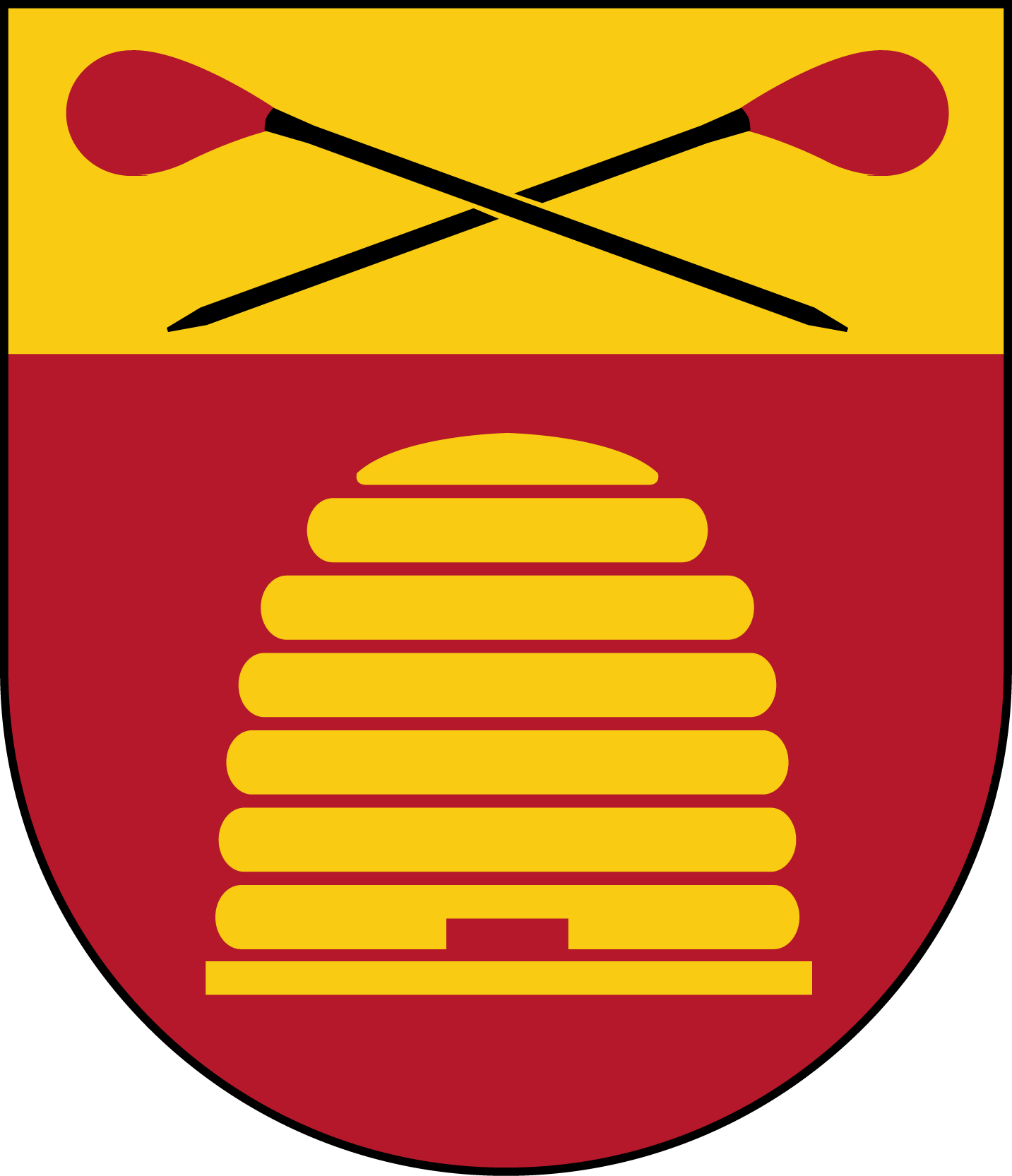

Coat of arms of Lessebo
Lessebo’s arms combine a gold beehive and crossed glassblowers’ pipes, recalling the municipality’s paper and glass industries.
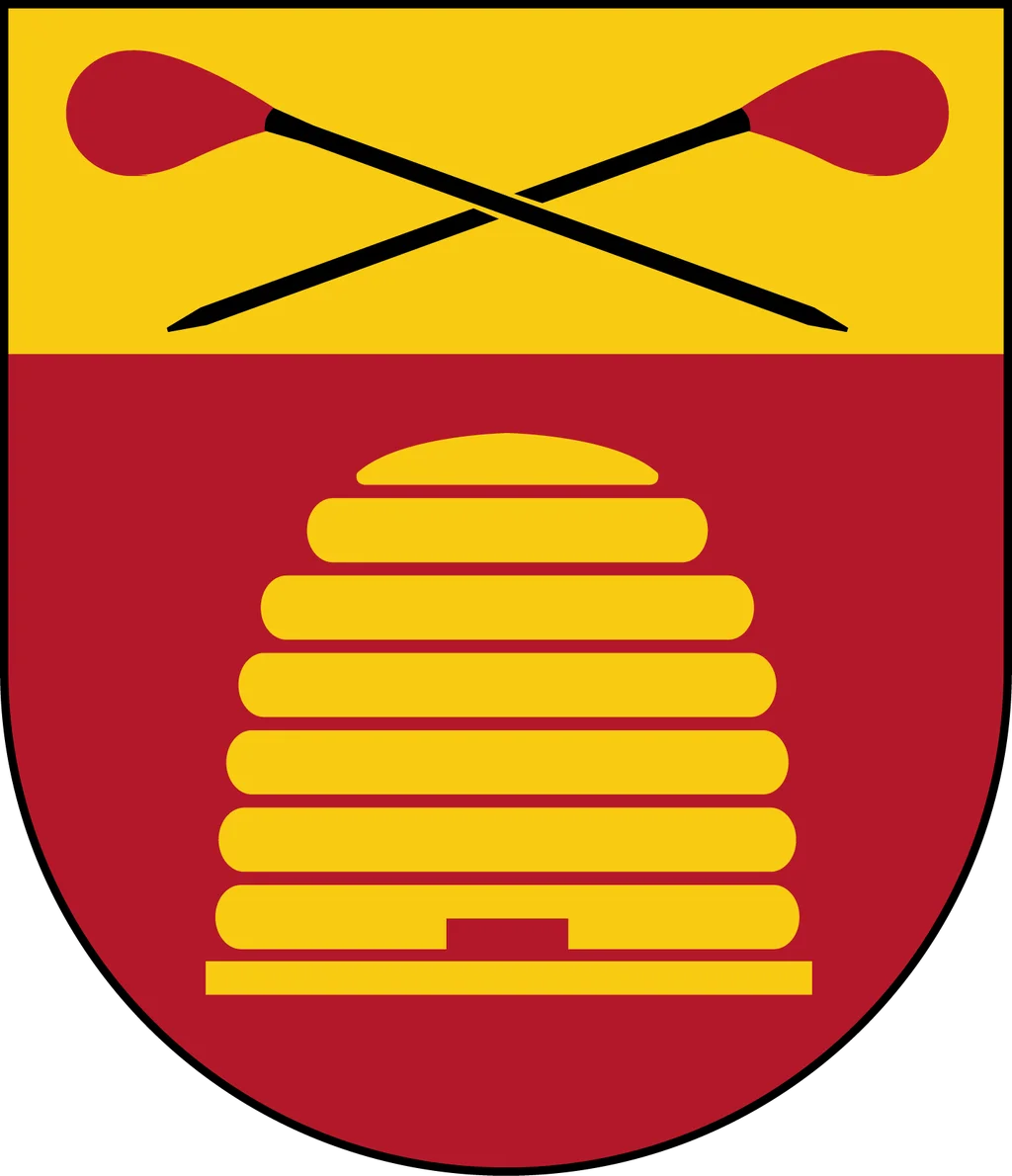
Swedish description in the Heraldica record
I rött fält en halmkupa av guld och däröver en ginstam av guld belagd med två korslagda svarta glasblåsarpipor med röda utrustningar.
The Swedish wording in the Heraldica record is registry information. Lessebo Municipality publishes its own blazon and explains how the charges relate to local industries.
Designers
- Vladimir A. Sagerlund
Registration and history
- 1971: In use as of
- 19 December 1986: Registered at the National Board of Patents and Registration
The municipality’s published blazon
Lessebo Municipality describes a gold beehive on a red field. Above it is a gold fess bearing two crossed, upward-pointing black glassblowers’ pipes with red glass gathered on them.
Paper and glass in the arms
The municipality says the beehive comes from the arms of Lessebo market town and symbolizes paper production. The glassblowers’ pipes come from the arms of Hovmantorp market town and represent its glassworks. The current arms were created after the 1971 municipal merger, which joined Lessebo market town, part of Hovmantorp market town, and the rural municipalities of Ekeberga and Ljuder.
Heraldic elements
The heraldic elements are identified using HERO, a heraldry ontology published through Finland's Finto service. It provides structured terminology for describing coats of arms and their components. The list describes the structure of the arms, not the symbolic meaning of its elements.
- escutcheon
- beehive
- glassblowing pipe
- field
- Or
- Gules
- Sable
- chief
- two
- unpartitioned
Sources and image rights
Heraldica / National Archives of Finland
Image licence: CC BY-SA 3.0
Image source and credit: National Archives of Sweden / Vladimir Sagerlund
Original image. The image has been resized and converted to WebP. The derivative retains the original image’s licence.