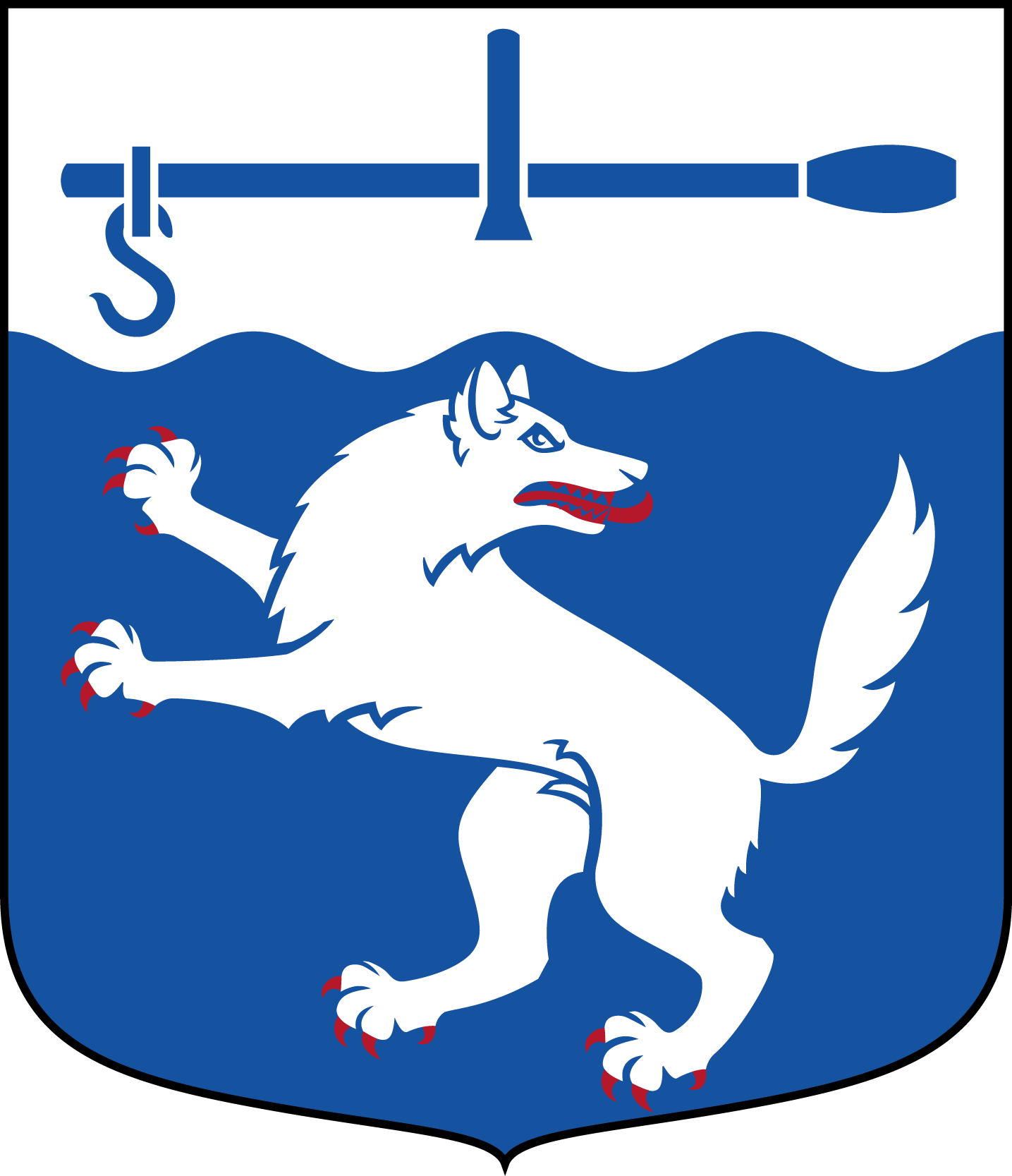

Coat of arms of Lycksele
Lycksele’s arms show a silver wolfdog looking back in a blue field beneath a wavy silver chief.
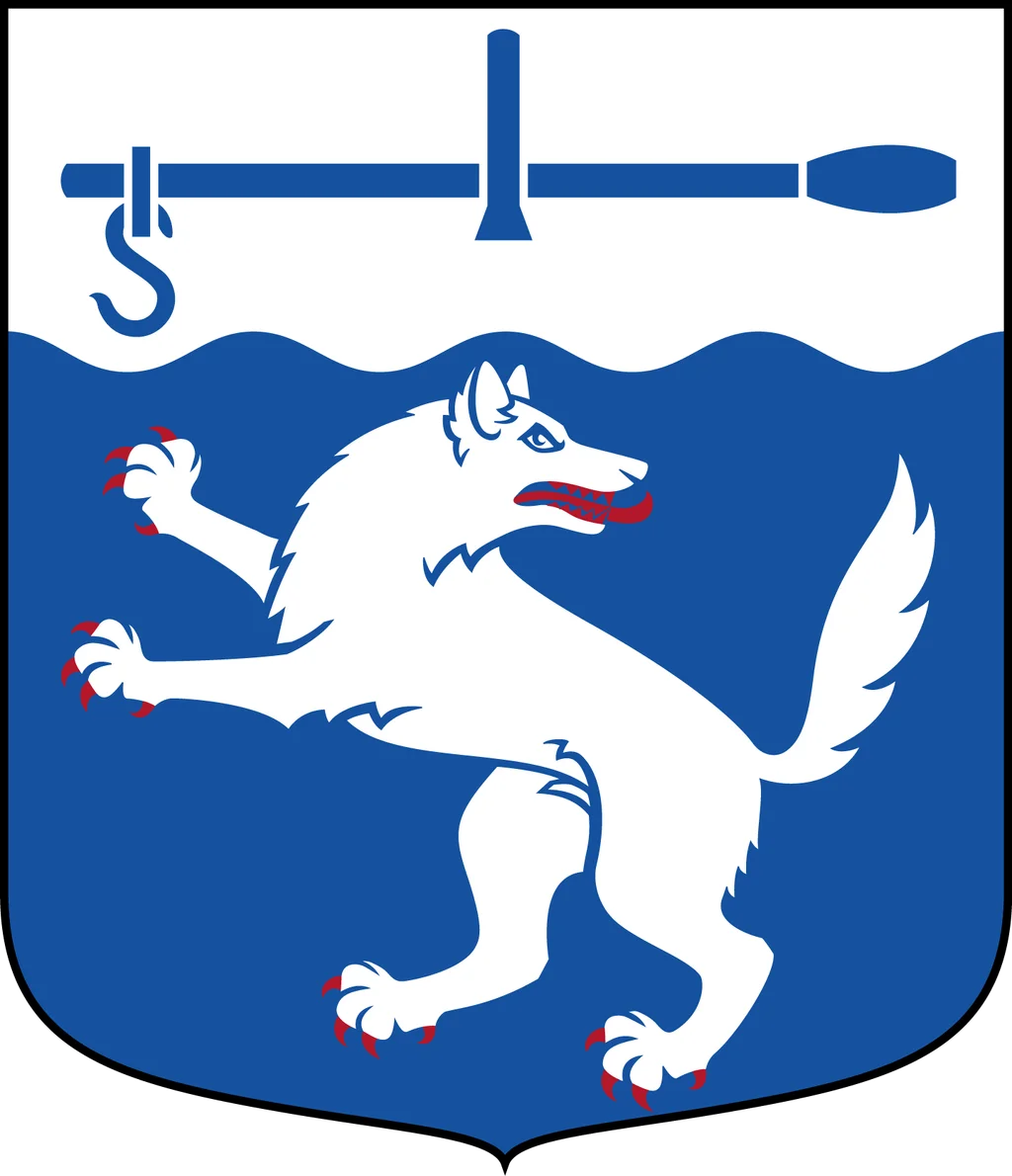
Swedish description in the Heraldica record
I blått fält en tillbakaseende hund av silver med röd beväring och däröver en genom vågskura bildad ginstam av silver belagd med ett blått besman.
The Heraldica text is registry information. Lycksele Municipality publishes the 1947 blazon and its interpretations of the charges; these are kept separate from details of the artwork.
Designers
- Vladimir A. Sagerlund
Registration and history
- 13 June 1947: Royal confirmation on
- 11 January 1974: Registered at the National Board of Patents and Registration
The municipality’s published blazon
Lycksele Municipality gives the 1947 description as a blue field bearing a rampant, regardant silver wolfdog with red claws, tongue and teeth, above which is a silver chief formed by a wavy line and charged with a blue steelyard.
Source: Lycksele kommun: Logotypens uppbyggnad och betydelse
The municipality’s interpretations and the history of the arms
According to the municipality, the steelyard refers to Lycksele’s history as a trading place, the wolfdog to the wilderness of the area, and the wavy line to the town’s position by the Ume River. In the 1971 municipal merger, the city arms were chosen for the new municipality; the rural municipality’s arms showing a pine and lynx were set aside. The municipality describes the mural crown as a mark of the city’s status.
Source: Lycksele kommun: Logotypens uppbyggnad och betydelse
Heraldic elements
The heraldic elements are identified using HERO, a heraldry ontology published through Finland's Finto service. It provides structured terminology for describing coats of arms and their components. The list describes the structure of the arms, not the symbolic meaning of its elements.
- escutcheon
- field
- Argent
- dog
- Gules
- Azure
- chief
- steelyard
- unpartitioned
Sources and image rights
Heraldica / National Archives of Finland · Wikidata
Image licence: CC BY-SA 3.0
Image source and credit: National Archives of Sweden / Vladimir Sagerlund
Original image. The image has been resized and converted to WebP. The derivative retains the original image’s licence.