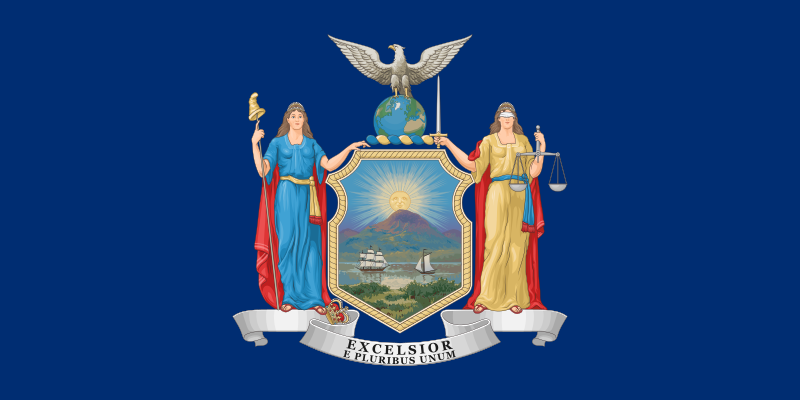
 New York
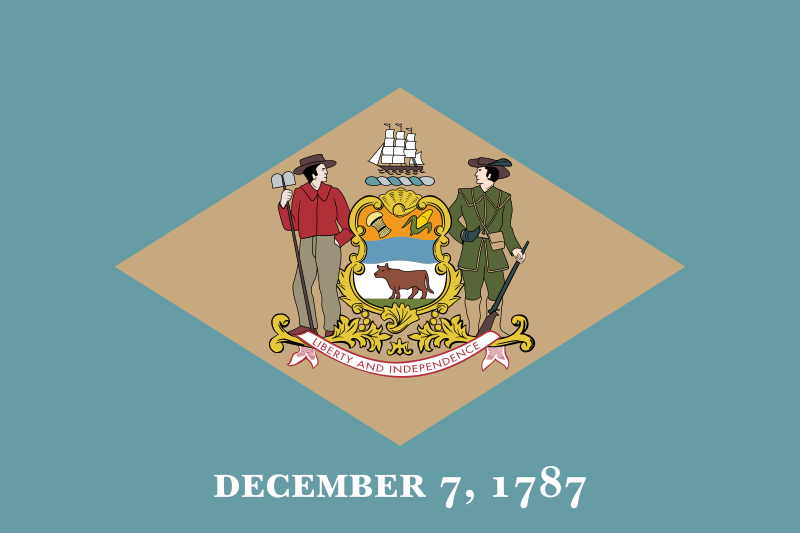 Delaware
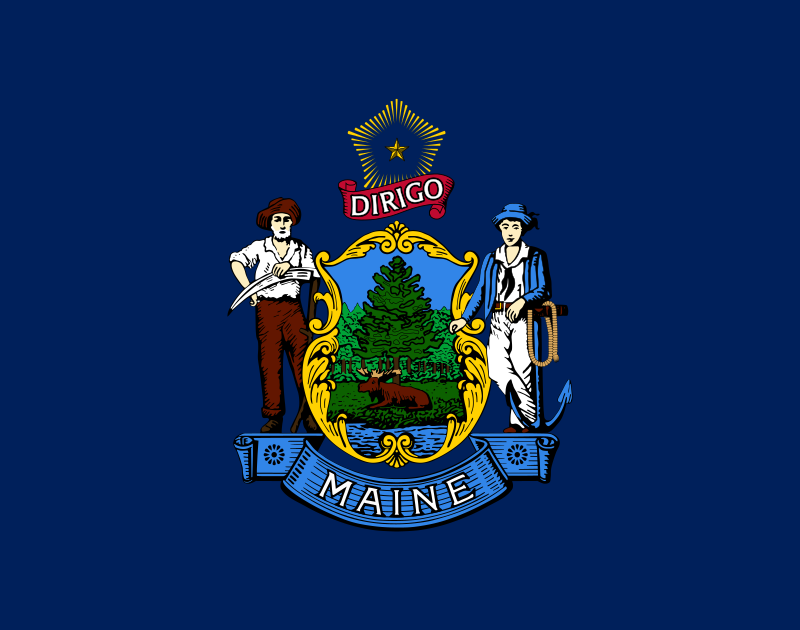 Maine
What is on New Jersey’s flag?
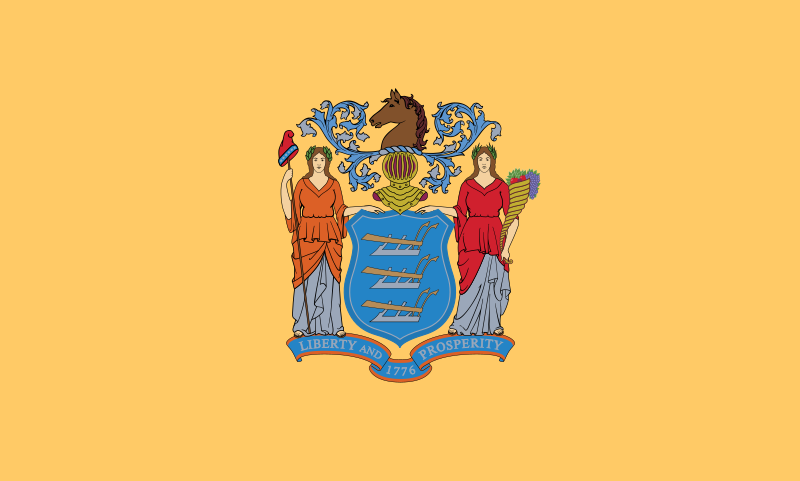
The state arms appear on a buff field: a blue shield with three plows, Liberty and Ceres, a helmet and a horse’s head.


State flag
New Jersey’s flag places the state arms on a buff field. Three plows, Liberty and Ceres, and the motto “Liberty and Prosperity” bring together symbols of agriculture, freedom and abundance.
This is the flag of the U.S. state of New Jersey.
Visible features:
New Jersey’s flag has a buff field with the state arms at its center. A joint resolution adopted in 1896 defined the flag as buff and required the state arms to be displayed in the middle.
The central device is New Jersey’s Great Seal, showing the state’s coat of arms. Buff is a yellowish tan; Jersey blue, the state’s dark blue, appears in details of the arms.
Source: Joint Resolution No. 2: To Define the State Flag,Symbols of New Jersey: State Seal and State Flag
Buff is the flag’s background color, and Jersey blue is the state’s dark blue. New Jersey’s official description says George Washington chose these colors for the flags of New Jersey army regiments during the Revolutionary War.
The 1896 resolution specified a buff flag with the arms at its center. Buff and Jersey blue were established as the state’s official colors by a later statute. Buff is therefore part of New Jersey’s emblematic tradition, not merely a decorative choice.
Source: Symbols of New Jersey: State Seal and State Flag,The State Flag and Official State Colors
The three plows on the blue shield represent New Jersey’s agricultural tradition. Liberty and Ceres stand on either side of it. Above them are a forward-facing helmet and a horse’s head crest.
The state’s official explanation connects the helmet and horse’s head with New Jersey’s independence and its early place among the states. The horse is also a recurring state emblem and appears as the crest above the arms.
Source: Symbols of New Jersey: State Seal and State Flag,The State Flag and Official State Colors
Liberty, on the viewer’s left, represents freedom and holds a staff topped with a liberty cap, a Revolutionary-era symbol. Ceres, on the right, is the Roman goddess of grain and agriculture; her cornucopia refers to the state’s harvest and natural abundance.
The scroll reads “Liberty and Prosperity.” The date 1776 refers to the year of New Jersey’s independence and first state constitution. New Jersey ratified the U.S. Constitution in 1787, so 1776 is not its year of joining the Union.
Source: Symbols of New Jersey: State Seal and State Flag,Documentary Treasures: New Jersey Constitution of 1776
The buff field and the arms at its center make the flag easy to identify. The three plows, Liberty and Ceres, helmet and horse’s head form a detailed emblem that stands out from flags showing a plain seal.
The motto “Liberty and Prosperity” and the date 1776 appear below the arms. Together, the buff background and blue shield give the flag a distinctive look.
Source: Joint Resolution No. 2: To Define the State Flag,Symbols of New Jersey: State Seal and State Flag
The state arms appear on a buff field: a blue shield with three plows, Liberty and Ceres, a helmet and a horse’s head.
Buff is a yellowish-tan color and the flag’s official background color. The arms also use Jersey blue.
They represent New Jersey’s agricultural tradition.
Liberty personifies freedom, and Ceres is the Roman goddess of grain and agriculture. Ceres’s cornucopia refers to harvest and abundance.
It is New Jersey’s state motto, displayed on the scroll beneath the arms.
The flag was officially adopted on March 26, 1896. The 1776 on the arms refers to independence and the first state constitution, not ratification of the U.S. Constitution.