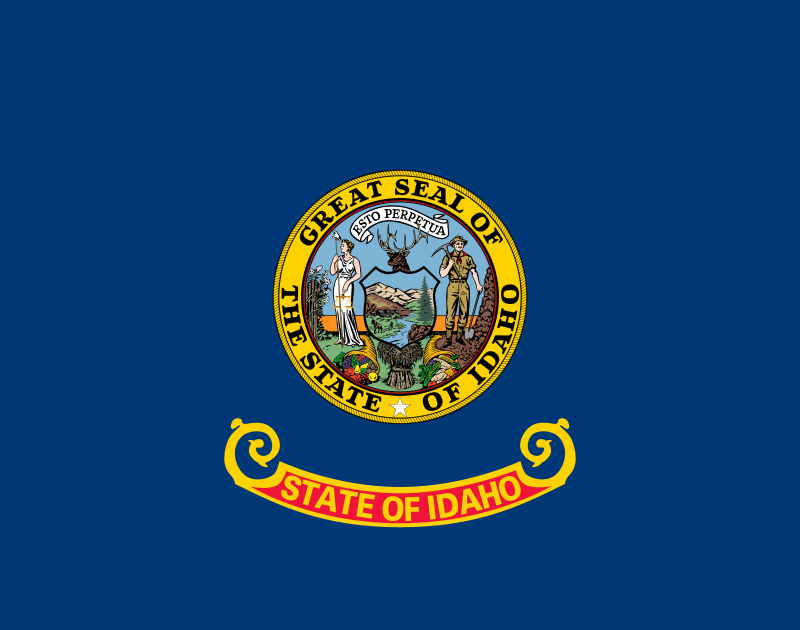
 Idaho
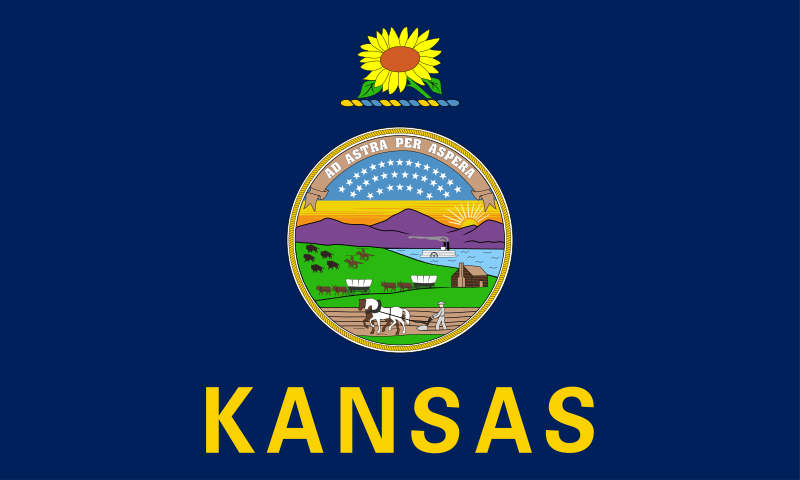 Kansas
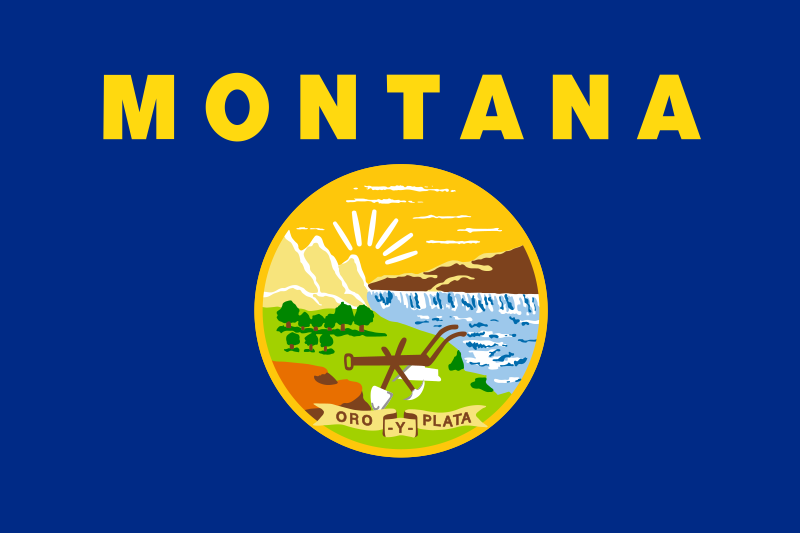 Montana
What is on Oklahoma’s flag?
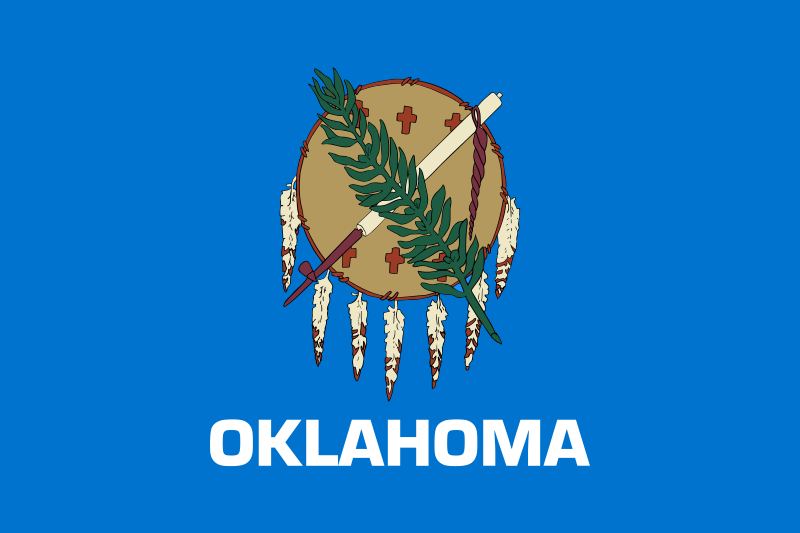
An Osage warrior’s shield, six star-like marks, seven eagle feathers, a crossed peace pipe and olive branch, and the word “Oklahoma.”


State flag
Oklahoma’s flag combines a carefully specified shield with symbols associated with peace. The state name was added in 1941, and the colors were standardized in law in 2006.
This is the flag of the U.S. state of Oklahoma.
Visible features:
A circular Osage warrior’s rawhide shield is centered on a blue field. It bears six cross-like marks and seven eagle feathers hang from its lower edge.
A calumet, or peace pipe, and an olive branch cross over the shield. The Oklahoma Historical Society records designer Louise Funk Fluke’s explanation that they represented a united people living in peace.
Source: Oklahoma Statutes, Title 25, § 25-91: State flag – Design,Oklahoma Symbols: State Flag
Artist Louise Funk Fluke created the winning design in a statewide flag competition. She studied Oklahoma history and Indigenous artifacts, consulting Joseph B. Thoburn of the Oklahoma Historical Society.
The state legislature approved her design on April 2, 1925. The Osage shield makes the flag’s connection to Indigenous history in Oklahoma specific rather than generic.
The six painted cross-like marks are not ordinary heraldic crosses. The Oklahoma Historical Society’s account of Fluke says she chose them to represent an Indigenous symbol for stars.
Seven pendant eagle feathers fringe the shield’s lower half. State law specifies white feathers tipped with gold brown and describes the shield’s details.
Source: Oklahoma Statutes, Title 25, § 25-91: State flag – Design,Fluke, Louise Funk
Current law specifies a French Blue field and an amber buckskin shield. The six marks and shield lacing are gold brown; the feathers are white with gold-brown tips.
The peace pipe has a flesh-colored stem, ruby-red bowl and tassel, while the olive branch is Dartmouth green. These standard colors were added to statute in 2006.
Source: Oklahoma Statutes, Title 25, § 25-91: State flag – Design,Oklahoma Symbols: State Flag
Oklahoma adopted the present design in 1925. In 1941, lawmakers added “Oklahoma” in white letters beneath the shield; the 2006 law standardized the design and colors.
Look for a blue field, a central shield crossed by a peace pipe and olive branch, and the state name below. The lettering distinguishes today’s flag from the original 1925 version.
Source: Oklahoma Statutes, Title 25, § 25-91: State flag – Design,State Flags of Oklahoma
An Osage warrior’s shield, six star-like marks, seven eagle feathers, a crossed peace pipe and olive branch, and the word “Oklahoma.”
Artist Louise Funk Fluke designed the winning entry, adopted by the legislature in 1925.
According to the Oklahoma Historical Society’s account of Fluke, she used them to represent an Indigenous star symbol.
Fluke explained that they represented a united people living in peace.
The state name was added in white lettering beneath the shield in 1941.
The standard colors were added to Oklahoma statutes in 2006.