What is shown on the flag?
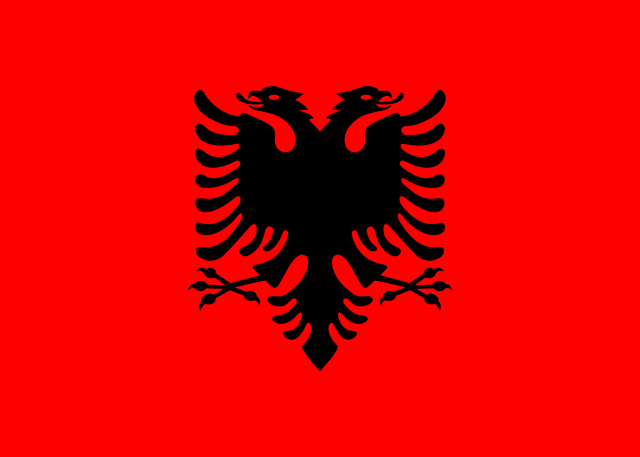
A black double-headed eagle on a red field.


Albania’s flag is a red field bearing a black double-headed eagle.

Albania
Information about the flag’s design, colours and proportions.
Visible design element: Animal.
Albania’s flag shows a black double-headed eagle centred on a red field. The eagle is the defining emblem; there are no bands, stars or smaller charges to compete with its silhouette.
The symbol is strongly associated with Albania’s national history and the legacy of Skanderbeg. The flag law establishes its dimensions and use, while the historical meaning of the eagle comes from the broader heraldic tradition rather than from a detailed explanation in the statute.
Article 14 of the Constitution identifies the red flag with a black double-headed eagle as a national symbol. The design is also set out in Albania’s legislation on national symbols. The eagle is a visible state emblem; the cited provisions do not assign separate meanings to the colours.
Albania marks Flag Day on 28 November, the date associated with the declaration of independence in 1912. The flag’s central eagle should not be confused with the eagle on the state seal, which is shown on a red shield with Skanderbeg’s helmet above it.
A black double-headed eagle on a red field.
28 November.
No. The flag has the eagle on a plain red field; the state seal places it on a shield with a helmet above.

These flags come from the same region and share one or more design characteristics.
Images are ordered by the years listed in the collection. A listed year may not be the flag’s official adoption year.
Vexilla's historical flag collection includes former flags associated with present-day countries and territories, as well as flags of states, empires, and other authorities that historically governed them.
A flag's inclusion in a country's historical collection does not necessarily mean that the country was independent at the time or that the flag was its own national flag.
The years shown are based on historical records in the dataset and do not always indicate the date of official adoption. The collection is not exhaustive, and historical usage, territorial coverage, and interpretations may vary.


