How is the flag arranged?
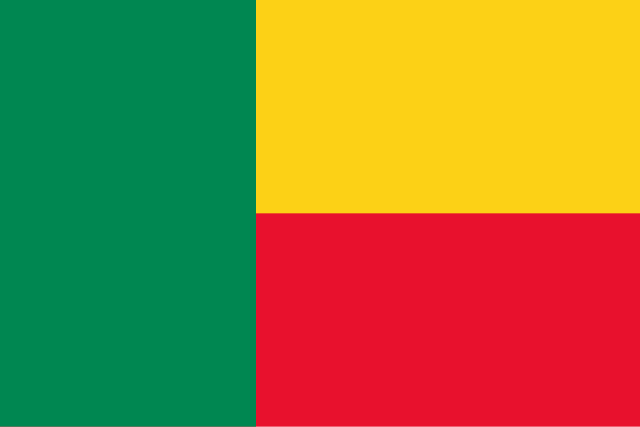
A green vertical band at the hoist, with yellow above red.


Benin’s flag has a green vertical band at the hoist and yellow and red horizontal fields.

Benin
Benin’s flag places a green vertical panel at the hoist beside two horizontal bands, yellow above red. This combination of a vertical panel and horizontal bands distinguishes it from a standard three-stripe tricolour.
The design was first adopted at independence in 1960 and restored in 1990 after the country’s socialist period. The government presents the flag among Benin’s national symbols; the familiar explanations of green, yellow and red are customary interpretations rather than a complete legal definition.
The Constitution defines the flag’s three colours and arrangement. The green band is at the hoist; yellow is above red in the remaining field. The government identifies green with hope and revival, yellow with national wealth and red with courage.
Benin adopted this design on 16 November 1959; it was first used at independence on 1 August 1960. After a period of replacement, it returned on 1 August 1990.
A green vertical band at the hoist, with yellow above red.
It was adopted on 16 November 1959 and first used on 1 August 1960.
Green: hope and revival; yellow: national wealth; red: courage.
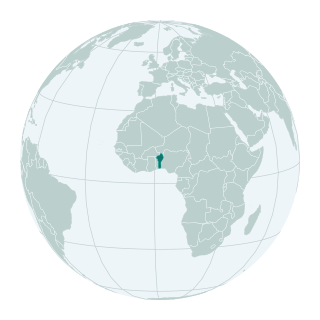
These flags come from the same region and share one or more design characteristics.
Images are ordered by the years listed in the collection. A listed year may not be the flag’s official adoption year.
Vexilla's historical flag collection includes former flags associated with present-day countries and territories, as well as flags of states, empires, and other authorities that historically governed them.
A flag's inclusion in a country's historical collection does not necessarily mean that the country was independent at the time or that the flag was its own national flag.
The years shown are based on historical records in the dataset and do not always indicate the date of official adoption. The collection is not exhaustive, and historical usage, territorial coverage, and interpretations may vary.


