How is the flag of Guinea-Bissau arranged?
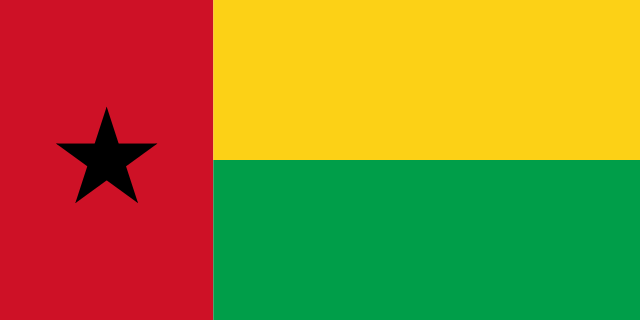
A red vertical panel with a black five-pointed star sits at the hoist; yellow is above green on the fly.


Guinea-Bissau's flag pairs a red hoist panel and black star with yellow and green horizontal bands. The Constitution sets out the design of this national symbol.

Guinea-Bissau
Visible design element: Star.
Article 22 of the Constitution describes three rectangular fields: a red vertical band at the hoist, marked with a black five-pointed star, and yellow and green horizontal bands on the fly, yellow above green. The red field and each horizontal band have equal width in the constitutional description.
The Presidency says the flag was adopted in 1973, when independence was proclaimed. It identifies the Black Star with African unity and explains red as the blood shed in the independence struggle, yellow as the sun, and green as hope. These are the official explanations published by the Presidency.
A red vertical panel with a black five-pointed star sits at the hoist; yellow is above green on the fly.
The Presidency of Guinea-Bissau dates its adoption to 1973, the year independence was proclaimed.
The Presidency describes the Black Star as a symbol of African unity.

These flags come from the same region and share one or more design characteristics.
Images are ordered by the years listed in the collection. A listed year may not be the flag’s official adoption year.
Vexilla's historical flag collection includes former flags associated with present-day countries and territories, as well as flags of states, empires, and other authorities that historically governed them.
A flag's inclusion in a country's historical collection does not necessarily mean that the country was independent at the time or that the flag was its own national flag.
The years shown are based on historical records in the dataset and do not always indicate the date of official adoption. The collection is not exhaustive, and historical usage, territorial coverage, and interpretations may vary.


