Why is there a cedar on Lebanon's flag?
The Lebanon cedar is a long-standing national symbol connected with the country's nature, history, strength and longevity.


Lebanon's Constitution describes a flag with three horizontal bands: red, white and red.
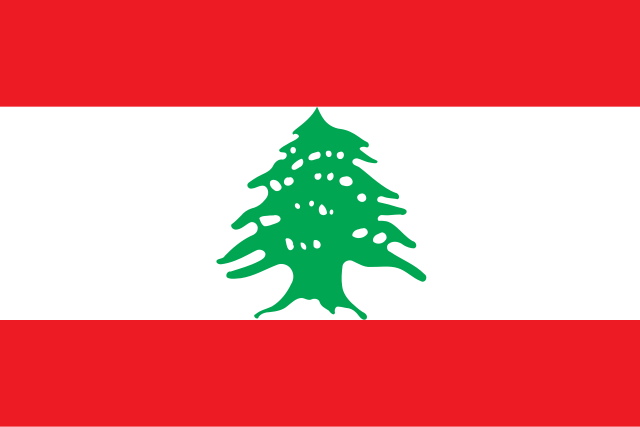

Lebanon
The flag has 3 horizontal bands from top to bottom: red · white · red.
Lebanon's flag has red, white and red horizontal bands with a green Lebanon cedar in the centre. The cedar, Cedrus libani, is the country's best-known national symbol. It has long been associated with the region and represents Lebanon's nature, history and enduring cultural tradition.
The tree is commonly linked with strength and longevity and with Lebanon's mountainous landscape. The red bands are often interpreted as sacrifices made for freedom and independence, while white is associated with peace, purity and the country's snowy mountains. These are stated as common interpretations, not as an exhaustive official code.
The white band equals the combined width of the two red bands. A green cedar stands in the centre; its width is one third of the white band and its top and bottom touch the red bands.
Article 5 sets out the cedar and band proportions but does not define the colours' symbolism. Explanations that connect red, white or green to particular historical or religious ideas are interpretations, not wording in that constitutional article. Keeping that distinction clear separates the legal design from later readings.
The Lebanon cedar is a long-standing national symbol connected with the country's nature, history, strength and longevity.
The white band is equal in width to the two red bands together.
It is centred in the white band, one third of that band's width, and touches both red bands.
No. Article 5 describes the design and proportions but does not assign symbolic meanings to the colours.

These flags come from the same region and share one or more design characteristics.
Images are ordered by the years listed in the collection. A listed year may not be the flag’s official adoption year.
Vexilla's historical flag collection includes former flags associated with present-day countries and territories, as well as flags of states, empires, and other authorities that historically governed them.
A flag's inclusion in a country's historical collection does not necessarily mean that the country was independent at the time or that the flag was its own national flag.
The years shown are based on historical records in the dataset and do not always indicate the date of official adoption. The collection is not exhaustive, and historical usage, territorial coverage, and interpretations may vary.
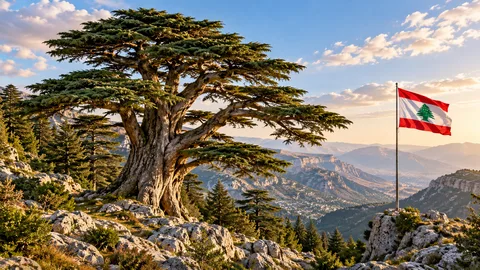
 Valto Tunnus Symbols and visual analysis writer
Lebanon’s best-known national symbol is the cedar of Lebanon. Learn why the tree appears on the flag, where the symbol comes from, and what it represents.


