Why is the Dutch flag not orange?
The earlier Prince's Flag used orange, but red replaced it as the modern tricolour became established; orange remained an important national colour.


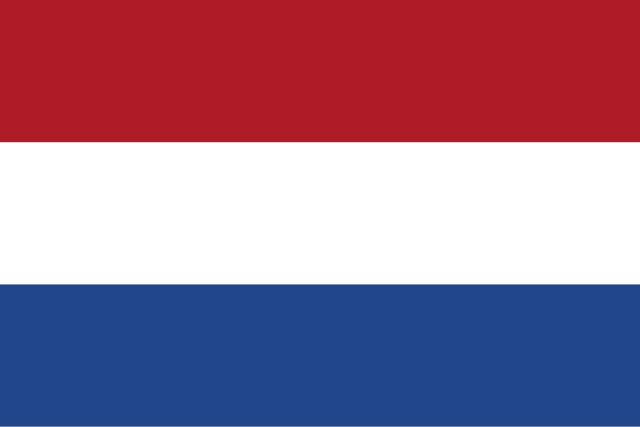
The Netherlands flag has horizontal red, white and blue bands. Often searched as the Holland flag, it developed from an earlier orange-white-blue standard; the official colours were specified in 1937.

Netherlands
Information about the flag’s design, colours and proportions.
Three equal-width horizontal bands.
The Netherlands' flag has three horizontal bands, red, white and blue from top to bottom. Its history reaches back to the Dutch Republic and the earlier Prince's Flag, which used orange, white and blue. Orange gradually gave way to red, and the red-white-blue tricolour became the national flag.
Orange nevertheless remains a strong Dutch national colour because of the House of Orange-Nassau, which is why it is prominent in sport and public celebrations. The flag can be distinguished from Luxembourg's similar tricolour by the Netherlands' darker shade of blue.
The Dutch flag has three horizontal bands: red at the top, white in the middle and blue at the bottom. A royal decree of 19 February 1937 specified bright vermilion, white and cobalt blue.
The Netherlands is the country's formal name. Holland is commonly used in everyday speech and search queries for the whole country, although it properly refers to part of it.
The first known reference to the Netherlands flag dates to 1572 and describes orange, white and blue. Orange was connected with the Principality of Orange; the historical design is known as the Prince's Flag, or Prinsenvlag.
During the seventeenth century, red gradually replaced orange. Better visibility at sea is sometimes given as an explanation, but the Royal House presents it as a story rather than a proven sole cause. When independence was restored in 1813, both versions were still seen, with red-white-blue preferred on government buildings.
The Netherlands and Luxembourg both use horizontal red, white and blue bands in the same order. The main visual difference is the shade of blue: Dutch blue is cobalt, while Luxembourg's is lighter sky blue.
The Luxembourg government describes sky blue as the colour of its flag. On small icons or faded historical images, colours can be difficult to judge, so the official descriptions help distinguish the two flags.
The earlier Prince's Flag used orange, but red replaced it as the modern tricolour became established; orange remained an important national colour.
From top to bottom, the bands are red, white and blue. The 1937 royal decree specified vermilion red, white and cobalt blue.
The Prinsenvlag was the historical orange-white-blue flag associated with the Principality of Orange; it preceded the modern red-white-blue design.
Both have horizontal red, white and blue bands. The Netherlands uses a darker cobalt blue, while Luxembourg's blue is lighter and closer to sky blue.
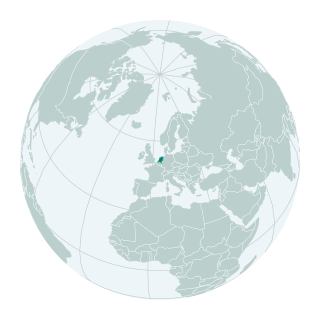
These flags come from the same region and share one or more design characteristics.
Images are ordered by the years listed in the collection. A listed year may not be the flag’s official adoption year.
Vexilla's historical flag collection includes former flags associated with present-day countries and territories, as well as flags of states, empires, and other authorities that historically governed them.
A flag's inclusion in a country's historical collection does not necessarily mean that the country was independent at the time or that the flag was its own national flag.
The years shown are based on historical records in the dataset and do not always indicate the date of official adoption. The collection is not exhaustive, and historical usage, territorial coverage, and interpretations may vary.


