What ratio does Nicaragua specify for its flag?
The flag decree gives a 3:5 ratio.


Nicaragua’s blue-and-white flag has three equal horizontal bands and a coat of arms at its centre. Recent constitutional wording also names a second flag symbol.

Nicaragua
Information about the flag’s design, colours and proportions.
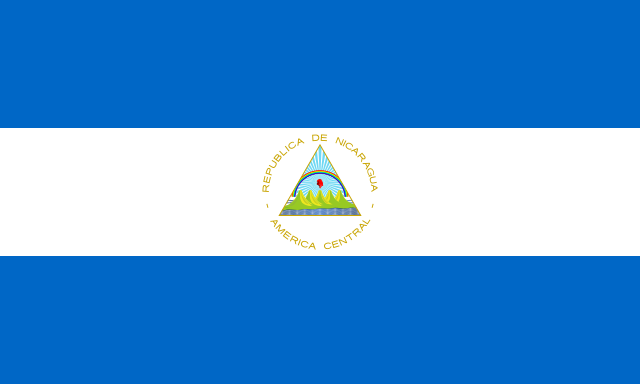
The flag has 3 horizontal bands from top to bottom: blue · white · blue.
Nicaragua’s blue-white-blue bands carry a triangular national emblem in the centre. Its volcanoes and rainbow are small details, but they separate the state flag from a plain horizontal triband at a glance.
It has three equal horizontal bands, blue, white and blue, with the national coat of arms in the centre of the white band. The decree associates blue with justice and loyalty, and white with purity and integrity.
Article 20 of the consolidated 2025 Constitution names the blue-and-white flags and the rojinegra flag among national symbols. Law No. 1249 (2025) designates 4 May as the Day of National Dignity and the Day of the National Flags. The provisions recognize both symbols without making their designs interchangeable.
The flag decree gives a 3:5 ratio.
It has three equal horizontal bands, blue, white and blue, with the national coat of arms in the centre of the white band.
Article 20 of the consolidated 2025 Constitution names the blue-and-white flags and the rojinegra flag among national symbols. Law No. 1249 (2025) designates 4 May as the Day of National Dignity and the Day of the National Flags. The provisions recognize both symbols without making their designs interchangeable.
It contains five volcanoes beneath a rainbow, with a liberty cap, as specified in the National Symbols Decree.
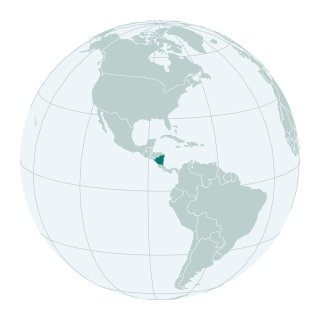
These flags come from the same region and share one or more design characteristics.
Images are ordered by the years listed in the collection. A listed year may not be the flag’s official adoption year.
Vexilla's historical flag collection includes former flags associated with present-day countries and territories, as well as flags of states, empires, and other authorities that historically governed them.
A flag's inclusion in a country's historical collection does not necessarily mean that the country was independent at the time or that the flag was its own national flag.
The years shown are based on historical records in the dataset and do not always indicate the date of official adoption. The collection is not exhaustive, and historical usage, territorial coverage, and interpretations may vary.


