What is shown on Oman's flag?
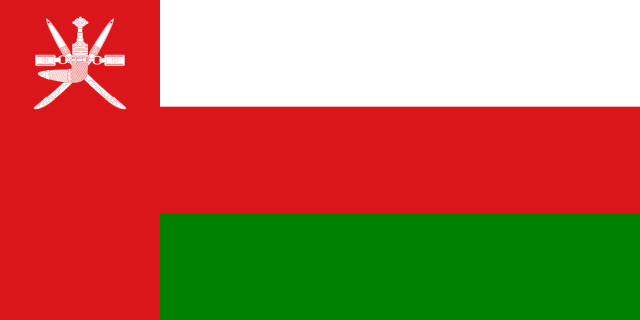
A white national emblem—a sheathed khanjar and belt over two crossed swords—appears on the red hoist panel.


Oman's flag combines a red hoist panel bearing the national emblem with white, red and green horizontal bands. The Ministry of Foreign Affairs explains its design and colours.

Oman
The flag has a red vertical panel at the hoist and three horizontal bands: white above red above green. The white national emblem in the red panel consists of a sheathed khanjar, its belt and two crossed swords. Oman adopted the flag by Royal Decree on 17 December 1970 and updated it by decree on 22 May 2004.
Oman's Ministry of Foreign Affairs says white represents the people's conviction in peace. Red recalls the former all-red flag and battles to expel foreign invaders; green represents the land's fertility and greenery. These meanings come from the Ministry's official explanation rather than an interpretation of the emblem alone.
A white national emblem—a sheathed khanjar and belt over two crossed swords—appears on the red hoist panel.
It was adopted by Royal Decree on 17 December 1970 and updated on 22 May 2004.
The Ministry of Foreign Affairs links white with peace, red with historic battles and the former red flag, and green with fertility and greenery.
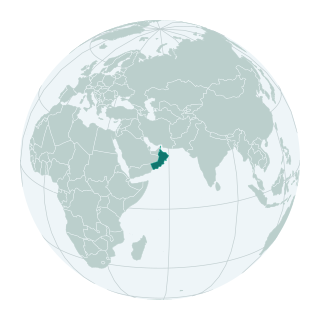
These flags come from the same region and share one or more design characteristics.
Images are ordered by the years listed in the collection. A listed year may not be the flag’s official adoption year.
Vexilla's historical flag collection includes former flags associated with present-day countries and territories, as well as flags of states, empires, and other authorities that historically governed them.
A flag's inclusion in a country's historical collection does not necessarily mean that the country was independent at the time or that the flag was its own national flag.
The years shown are based on historical records in the dataset and do not always indicate the date of official adoption. The collection is not exhaustive, and historical usage, territorial coverage, and interpretations may vary.

 Aarne Arkisto Historical emblems writer
Ireland’s blue harp flag features a golden harp with a winged female figure. Where did the unusual design come from, why were some harp flags green, and what became of the harp?


