

Flag of South Korea
Its colour palette includes white, red, blue, and black.
Current flag


Flag emoji 🇰🇷
South Korea
Flag facts
Information about the flag’s design, colours and proportions.
- Proportion
- 2:3 height: width
Flag design
A disc centred on a plain field.
- Layout
- Plain field
- Shapes
- Disc – Centre
- Colours
- White, red, blue, and black
Sources
What does South Korea's flag mean?
South Korea's flag is called the Taegeukgi. On a white field it places a red-and-blue taegeuk at the centre and four black trigrams in the corners. The white background is commonly linked with purity, peace and Korea's traditional association with white.
The taegeuk represents balance between opposing, complementary forces and harmony in the universe. The four trigrams belong to East Asian symbolism and are commonly interpreted as heaven, earth, water and fire. Together they reinforce the design's themes of balance, movement and harmony. The flag's history reaches back to the late nineteenth century and it became the national flag of the South Korean state in 1948.
Country facts
- Type
- Country
- Name
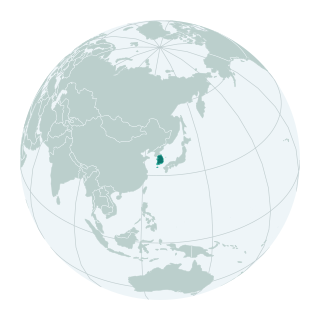
- South Korea
- Continent
- Asia
- Capital
- Seoul
- ISO 3166-1 alpha-2
- KR
- ISO 3166-1 alpha-3
- KOR
- ISO 3166-1 numeric
- 410
- Top-level domain
- .kr
- Area
- 98,480 km²
- Population
- 51,684,564 (2025)
- Currency
- KRW
- Calling code
- +82
Flags with a similar layout
These flags come from the same region and share one or more design characteristics.


Historical flags: South Korea (1945–)
Images are ordered by the years listed in the collection. A listed year may not be the flag’s official adoption year.
About historical flags
Vexilla's historical flag collection includes former flags associated with present-day countries and territories, as well as flags of states, empires, and other authorities that historically governed them.
A flag's inclusion in a country's historical collection does not necessarily mean that the country was independent at the time or that the flag was its own national flag.
The years shown are based on historical records in the dataset and do not always indicate the date of official adoption. The collection is not exhaustive, and historical usage, territorial coverage, and interpretations may vary.
