How can Sweden's flag be distinguished from the other Nordic flags?
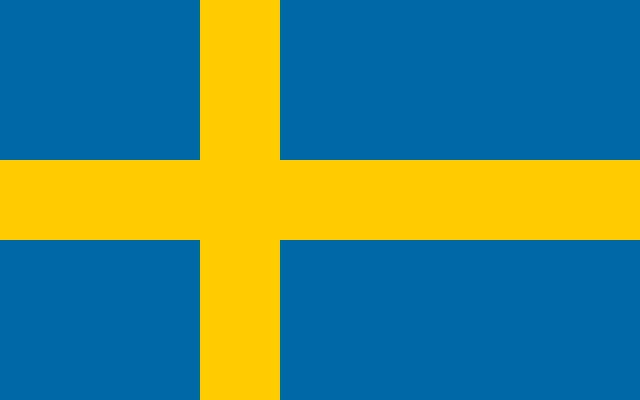
It is the Nordic cross flag with a plain blue field and a yellow or golden cross.


Sweden's blue flag with a golden yellow Nordic cross has proportions and official forms set out in law. Its history reaches back to the sixteenth century.

Sweden
Information about the flag’s design, colours and proportions.
Nordic cross.
Sweden's flag has a yellow, or golden, Nordic cross on a blue field. The cross reaches the edges and its upright is shifted toward the hoist, as on the other Nordic cross flags. Blue and gold are tied to Sweden's long heraldic tradition, including the three golden crowns on blue in the national arms.
The cross also places Sweden within the flag family shared by Denmark, Norway, Finland and Iceland. It has a historical Christian background, while today it functions above all as a readily recognized Nordic design.
Sweden's Flag Act describes the flag as blue with a yellow cross set at right angles to its edges. The rectangular version has a height-to-length ratio of 10:16; the law also specifies the relative proportions of its four fields and the cross arms.
The statutory colours are light medium blue and golden yellow. The cross runs to the flag's edges, and its upright sits toward the hoist rather than at the centre. These measurements give Sweden's flag its familiar Nordic-cross layout.
Swedish law permits a square-ended rectangular flag and a three-tailed form. The rectangular flag is used in ordinary cases; the three-tailed version has a height equal to half its length, including the tails.
The Armed Forces use the three-tailed flag as a naval ensign, as may other authorities carrying out military activities under government rules. The monarch may use a royal version with the large or small coat of arms, while the law reserves the ordinary rectangular form for other use.
The Swedish National Archives traces the flag's history to the middle of the sixteenth century. It links the blue and gold palette to Sweden's coat of arms, where three golden crowns stand on a blue field.
The archives also relate the cross to the quartered blue fields in Sweden's greater coat of arms. The account connects the flag's colours with heraldry without assigning a separate official meaning to each colour.
Sweden has celebrated Flag Day across the country on 6 June since 1916. The date recalls Gustav Vasa's election as king in 1523 and also coincides with the adoption of the 1809 Instrument of Government.
Since 1983, 6 June has also been Sweden's National Day. The ordinance on general flag days names it as both National Day and Swedish Flag Day, giving the date its two official roles.
It is the Nordic cross flag with a plain blue field and a yellow or golden cross.
The law sets its height-to-length ratio at 10:16 and specifies the proportions of the fields and cross. The three-tailed form has a different overall ratio.
The three-tailed form is used as a naval ensign by the Armed Forces and by other authorized military authorities. The ordinary rectangular flag is used in other cases.
It is 6 June, which is also Sweden's National Day. The date has been a nationwide Flag Day since 1916 and has been the National Day since 1983.
The law specifies light medium blue and golden yellow but does not assign a meaning to each colour. The National Archives connects the palette with Sweden's coat of arms.
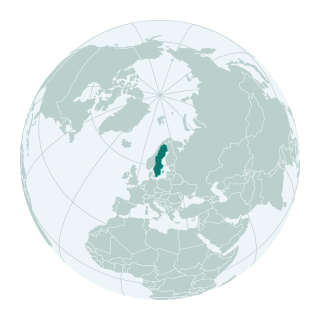
These flags come from the same region and share one or more design characteristics.
Images are ordered by the years listed in the collection. A listed year may not be the flag’s official adoption year.
Vexilla's historical flag collection includes former flags associated with present-day countries and territories, as well as flags of states, empires, and other authorities that historically governed them.
A flag's inclusion in a country's historical collection does not necessarily mean that the country was independent at the time or that the flag was its own national flag.
The years shown are based on historical records in the dataset and do not always indicate the date of official adoption. The collection is not exhaustive, and historical usage, territorial coverage, and interpretations may vary.


